




Why Winter Is a Great Time for Wildlife Viewing
While summer is a popular season for exploring Canada’s national parks, winter brings its own advantages for wildlife enthusiasts. As temperatures drop and snow settles across the mountains, many animals adjust their movements and feeding habits to adapt to the changing conditions.
Here are a few reasons why winter can be a wonderful time to discover Canadian Rockies wildlife:
- Wildlife moves to lower elevations: Some animals move towards valleys and open meadows in search of food and shelter, making them easier to spot from scenic roads and designated viewpoints.
- Snow makes animal tracks easier to identify: Fresh snowfall can reveal tracks and other signs of wildlife activity, offering clues about which animals have recently passed through an area.
- A quieter mountain experience: With fewer visitors at some popular viewpoints, winter offers a more peaceful way to appreciate the natural surroundings.
- A different perspective on animal behaviour: Winter provides an opportunity to observe how wildlife adapts to colder temperatures, changing food sources and snowy conditions.
Of course, wildlife sightings are never guaranteed. Animals move freely through their natural habitats, and every day brings different opportunities. That’s part of what makes each encounter so special. Still deciding when to travel? Compare the seasons in our guide to the best time to visit the Rockies.
Wildlife You Can See in the Canadian Rockies in Winter
The Canadian Rockies are home to an incredible variety of wildlife, from large mammals roaming the valleys to birds soaring above the mountain peaks. While some species are more commonly spotted than others during winter, keeping your eyes open throughout the journey can lead to some exciting discoveries.
Here are some of the animals you may encounter during a winter tour of the Canadian Rockies.
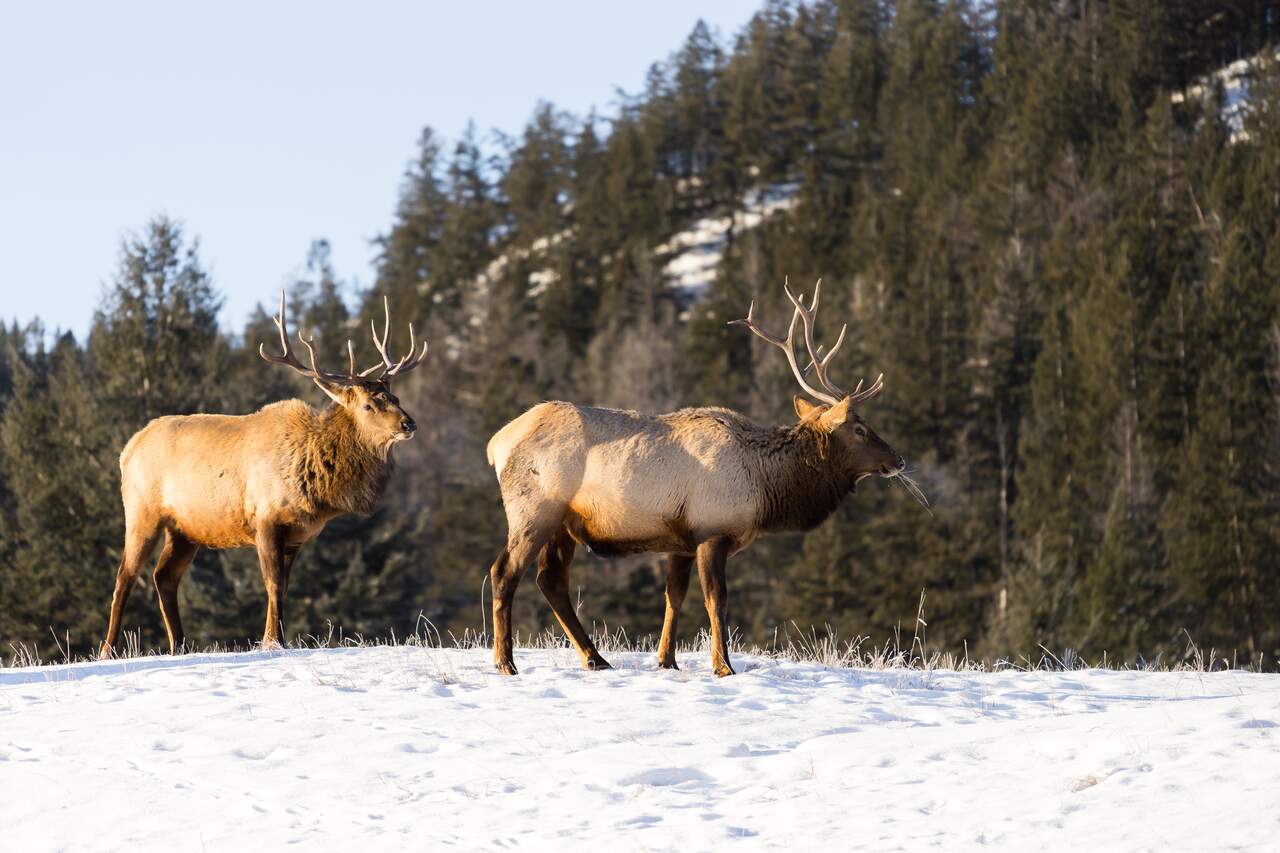
Elk and Deer
Elk are among the most recognisable animals in the Canadian Rockies. Also known as wapiti, these large members of the deer family can often be found in open valleys and meadows, where they search for grasses, shrubs and other available vegetation.
During colder months, elk grow thicker winter coats to help them stay warm. They may also gather in groups, making it easier to spot several animals grazing together.
A few interesting facts about elk and deer:
- Male elk, known as bulls, typically retain their impressive antlers into winter before shedding them later in the season.
- Elk often gather in larger groups during winter, particularly in areas with accessible food.
- Mule deer and white-tailed deer are also found throughout parts of the Canadian Rockies.
- Deer adapt to winter by feeding on shrubs, twigs and other vegetation that remains accessible beneath the snow.
💡Where to look: Keep an eye out around lower-elevation valleys, open meadows and quiet stretches of road, particularly during the early morning and late afternoon when wildlife tends to be more active.
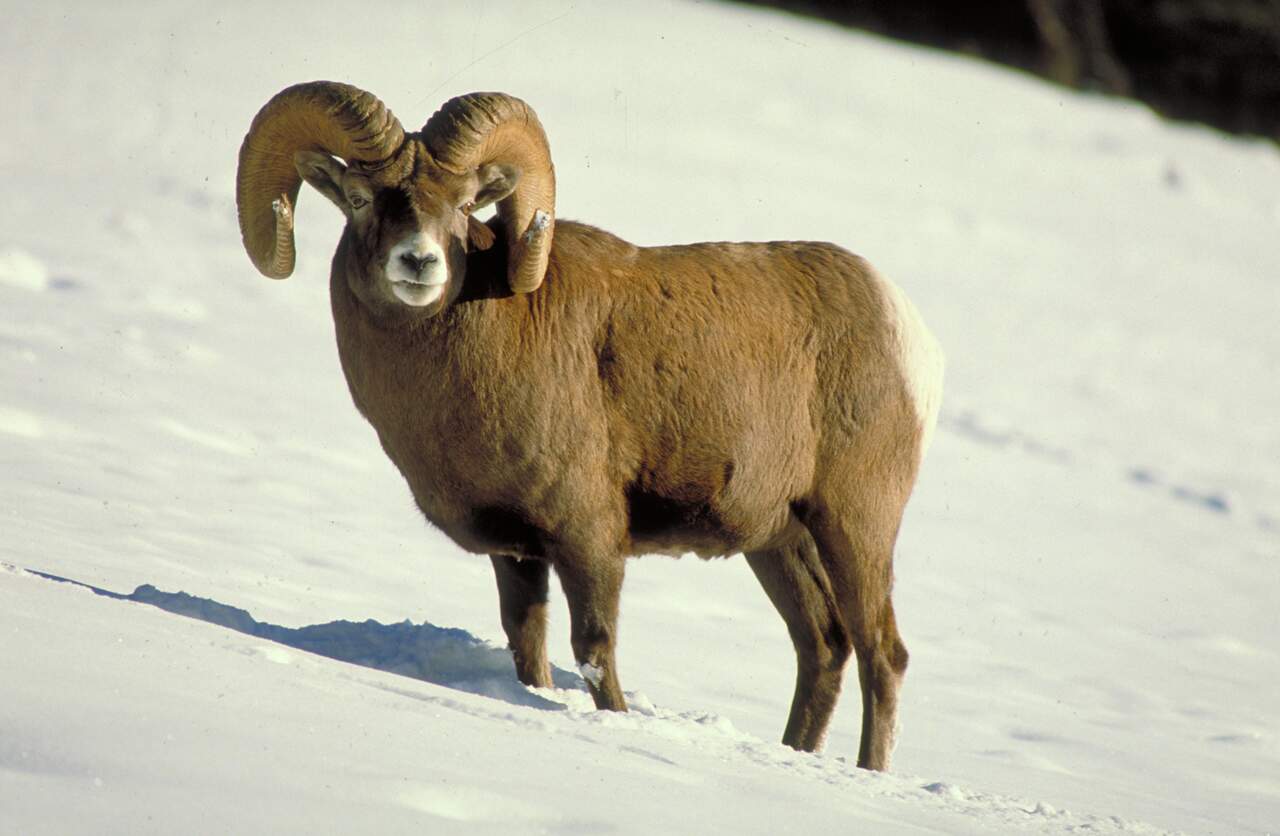
Bighorn Sheep
With their impressive curved horns and ability to navigate steep mountain terrain, bighorn sheep are one of the most iconic animals of the Canadian Rockies.
Unlike some other species that move towards forested valleys during winter, bighorn sheep often remain on exposed rocky slopes. These areas can provide access to vegetation while offering protection from deep snow.
What makes bighorn sheep so fascinating?
- Their specialised hooves help them maintain their footing on steep, rocky mountain surfaces.
- Male bighorn sheep, known as rams, have large curled horns, while females, known as ewes, have shorter, more slender horns.
- They often gather in groups, particularly during winter.
- Their ability to navigate rugged mountain terrain makes them incredibly well adapted to their environment.
💡Where to look: Banff National Park is a great place to keep an eye out for bighorn sheep, particularly around Lake Minnewanka and other rocky areas where they are known to roam.
If you happen to spot a group of sheep along the mountainside, take a moment to appreciate how effortlessly they move through their natural environment!
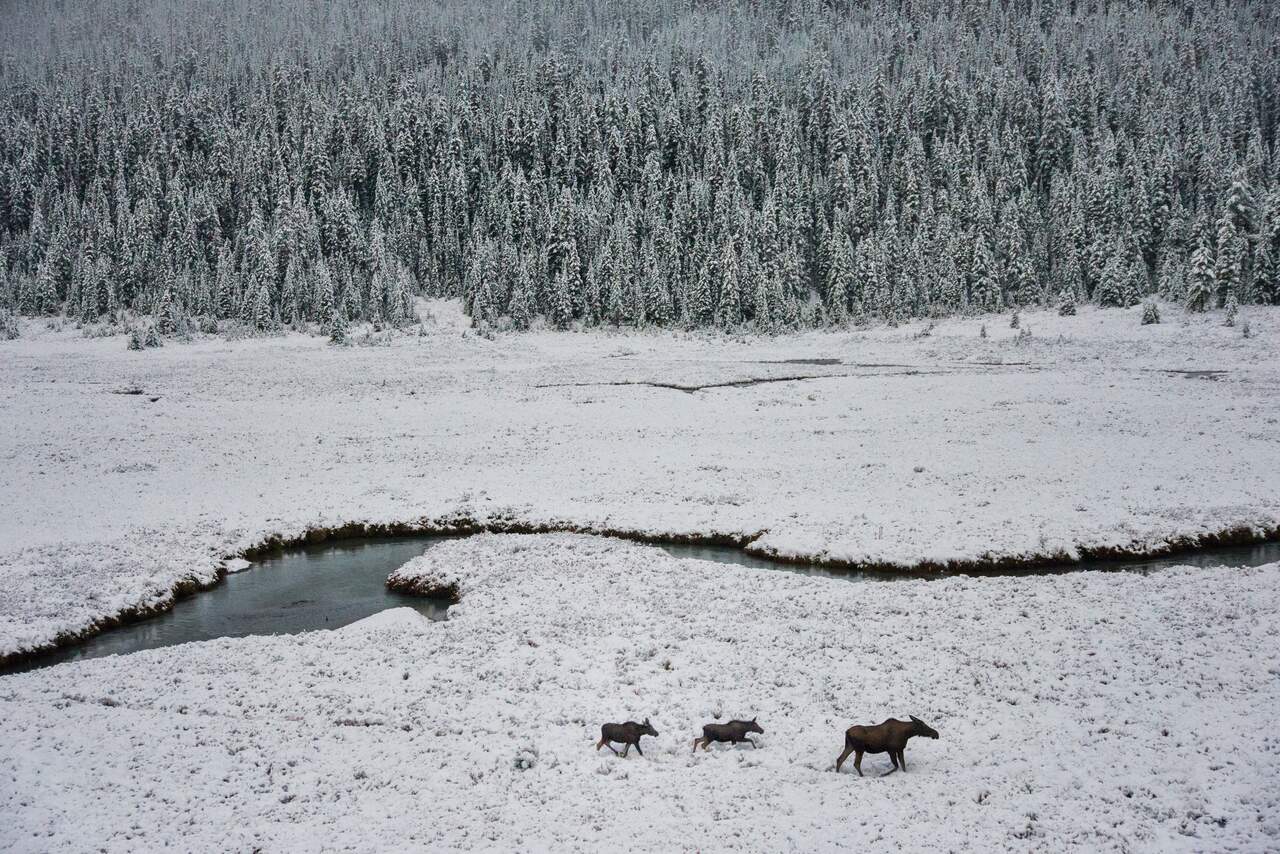
Moose
As the largest member of the deer family, moose are always an impressive sight. Recognizable by their long legs, broad noses and, in males, large palmate antlers, these animals are well adapted to the colder conditions of the Canadian Rockies.
During winter, moose generally favour forested areas and wetlands where they can find willow, shrubs and young tree branches to eat. Their long legs help them move through deeper snow, while their large hooves distribute their weight across softer ground.
Interesting things to know about moose:
- Moose are generally solitary animals, unlike elk, which often gather in larger groups.
- Their long legs help them navigate deep snow and uneven terrain.
- They feed on woody vegetation, including willow branches and shrubs, during winter.
- Male moose shed their antlers during winter, typically between late autumn and early spring.
💡Where to look: Travellers exploring the wider Yoho National Park region, including the forests and waterways near Emerald Lake, may be fortunate enough to spot one. Sightings are unpredictable, so keep your eyes open along forest edges and quieter areas. (Remember to observe from a respectful distance and never approach these powerful animals.)
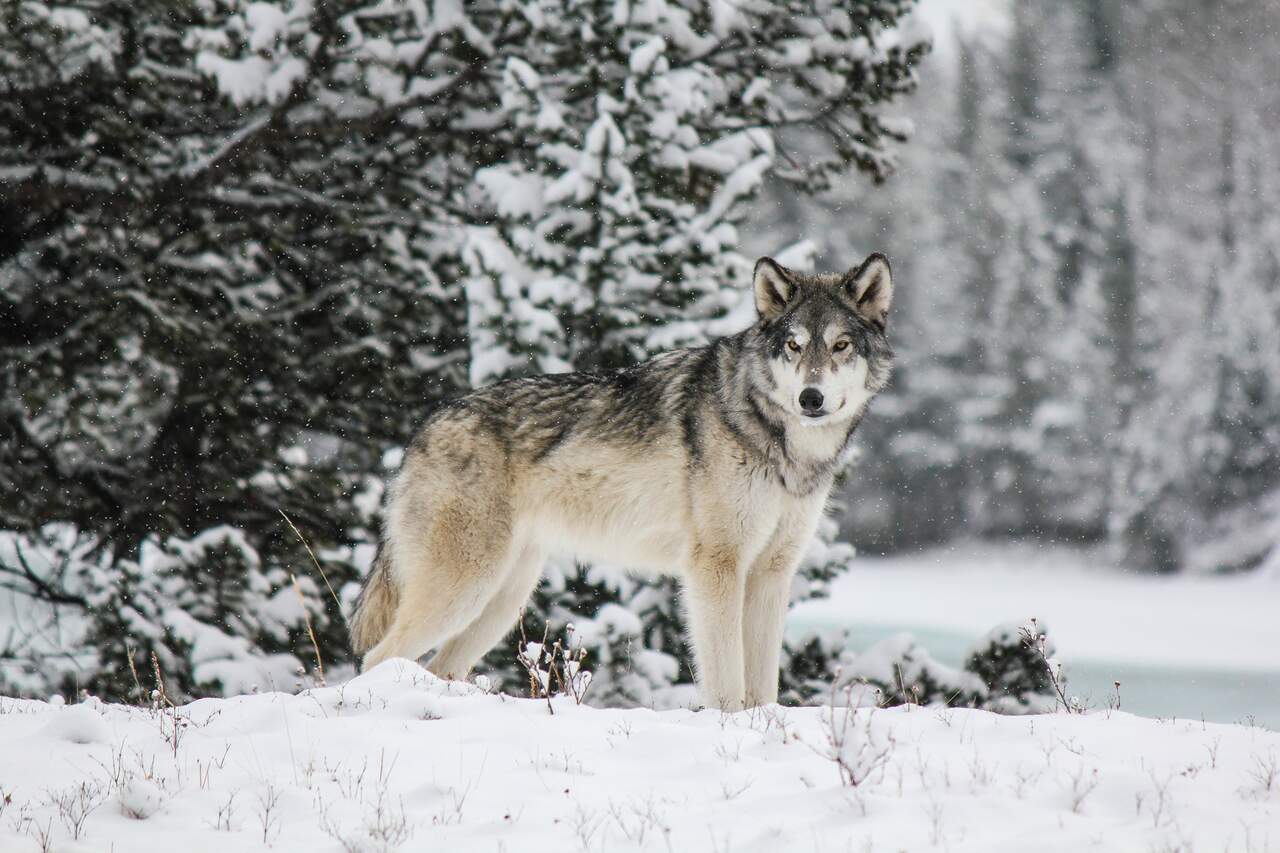
Wolves and Coyotes
The Canadian Rockies are also home to fascinating members of the canine family, including grey wolves and coyotes.
Wolves are highly adaptable animals that live in packs. During winter, their thick coats help protect them from freezing temperatures, while their keen senses and ability to travel across snowy terrain help them search for food.
Coyotes, meanwhile, are smaller and more commonly encountered throughout the region. They are opportunistic feeders, meaning their diet can include small mammals, birds and other available food sources.
How do they adapt to winter?
- Wolves: Their thick winter coats provide insulation against freezing temperatures, while their strong legs and large paws help them travel across snowy terrain.
- Coyotes: Their adaptability allows them to survive in a variety of habitats, including snowy valleys and forest edges.
- Both species: They rely on their keen senses to locate food and navigate their surroundings during the colder months.
Although both species remain active during winter, spotting them can be challenging. Wolves are particularly elusive, and sightings are relatively rare. If you’re lucky enough to see one in the wild, it is a special reminder of the incredible biodiversity found throughout the Canadian Rockies.
Mountain Goats
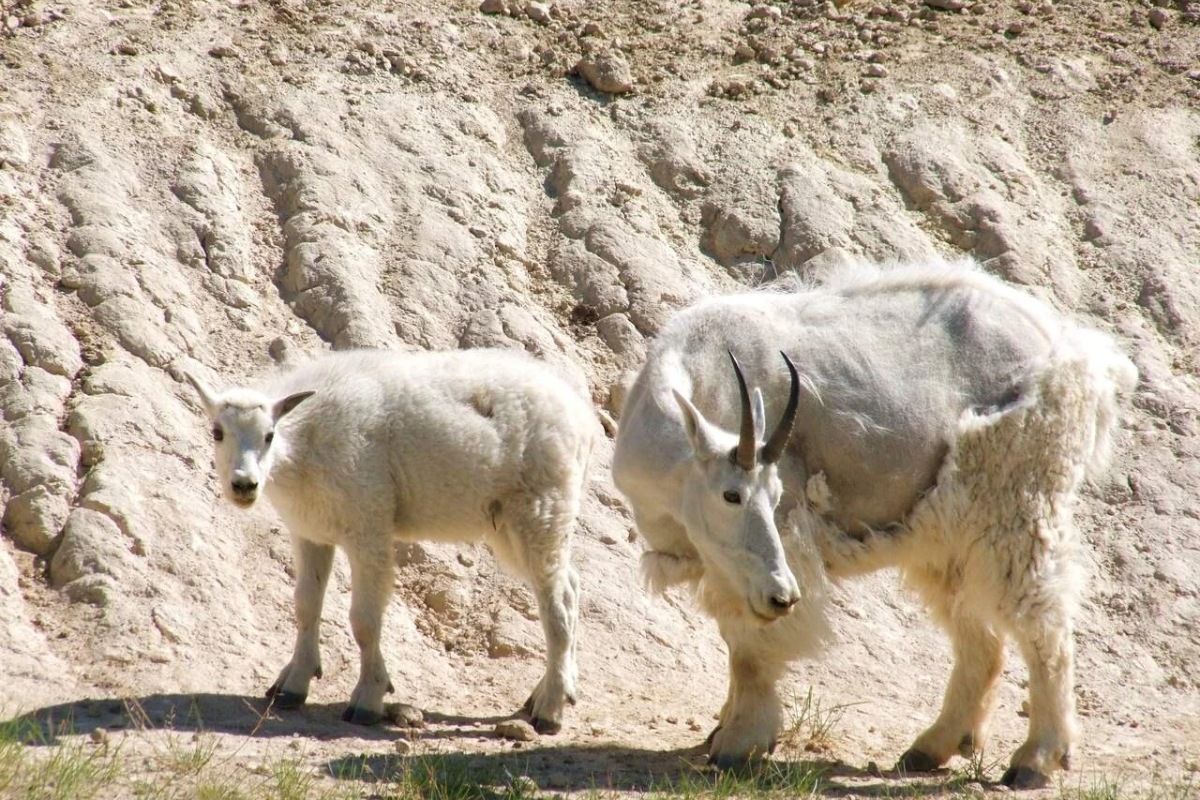
Known for their thick white coats and impressive climbing abilities, mountain goats are perfectly suited to life in the rugged mountains of Western Canada.
These remarkable animals are well adapted to cold weather, with dense coats that provide insulation against freezing temperatures. Their specialized hooves also feature soft, gripping pads that help them navigate steep, rocky slopes with remarkable stability.
What makes mountain goats special?
- Their thick white coats provide excellent protection against cold temperatures.
- Their specialized hooves help them climb steep and rocky terrain.
- They typically remain at higher elevations throughout the year, although they may move depending on snow conditions and food availability.
- Both males and females have short, black horns.
💡Where to look: Glacier National Park is one of the places where visitors may spot mountain goats, particularly around the rocky slopes near Rogers Pass. (Look carefully along the mountainsides for small white shapes against the snow-covered rocks. Binoculars can make it easier to appreciate these incredible climbers from a safe distance.)
Bird Species
Wildlife viewing in the Canadian Rockies isn’t limited to large mammals. The region is also home to a fascinating variety of bird species, many of which remain active throughout winter.
Among the birds you may encounter are:
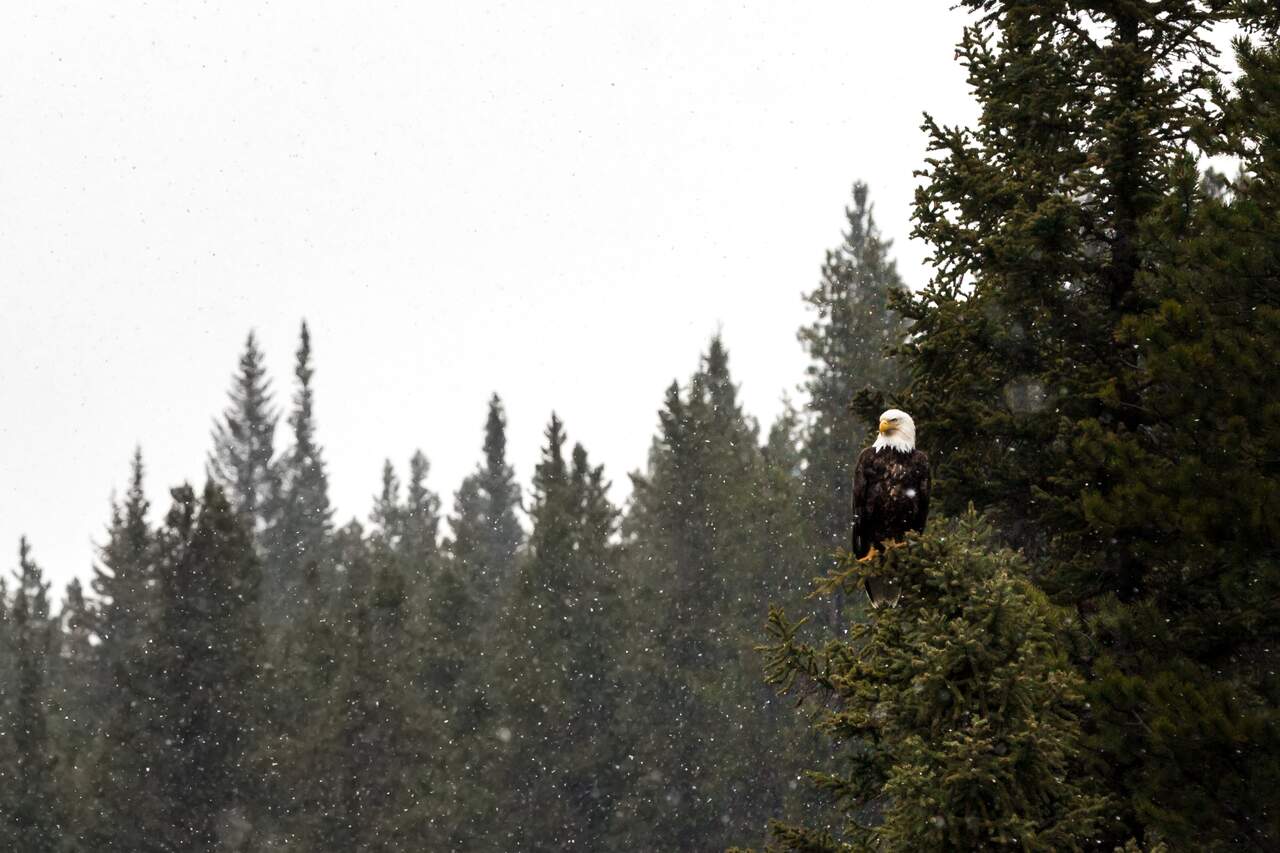
- Bald Eagles: Recognizable by their white heads and impressive wingspans, bald eagles are powerful birds of prey. They can often be spotted near rivers and lakes, where they search for fish and other food sources.
- Owls: Several owl species inhabit the Canadian Rockies, including great horned owls and northern hawk owls. Their excellent hearing and vision help them hunt in low-light conditions, making winter an interesting time to learn about their behaviour.
- Common Ravens: Known for their distinctive calls and problem-solving abilities, ravens are highly intelligent and adaptable birds. Their dark feathers make them easy to recognize against the snowy mountain landscape.
For birdwatchers, even a short stop near a forest or frozen lakeshore can offer opportunities to observe these species. Listen carefully, too, as the calls of ravens and other birds can carry across the quiet winter landscape.
Where to See Wildlife in the Rockies in Winter
The Canadian Rockies cover an extensive mountain region, with different habitats supporting different wildlife species. From open valleys to forested lakeshores and rugged mountain slopes, knowing where to look can make your wildlife-viewing experience even more rewarding.
Here are three destinations worth exploring. For a wider overview, see our guide to the best national parks to visit in the Canadian Rockies.
Banff National Park
As one of Canada’s most famous national parks, Banff National Park is a wonderful destination for winter wildlife viewing. Its combination of mountain valleys, evergreen forests, rivers and open meadows provides habitats for a wide range of animals.
Some areas worth keeping an eye on include:
- Bow Valley Parkway: This scenic route between Banff and Lake Louise passes through important wildlife habitat. Travellers may spot elk and deer along the way, while other animals occasionally make an appearance.
- Vermilion Lakes: Located just outside the Banff townsite, these lakes offer a peaceful setting for observing birds and looking out for wildlife around the surrounding wetlands and forest edges.
- Lake Minnewanka: The surrounding rocky terrain provides suitable habitat for bighorn sheep, making this another area worth exploring.
Whether you’re exploring the scenic roads or enjoying the views from a designated stopping point, Banff offers plenty of reasons to keep your camera ready. Browse our Banff tours to see the park with a local guide.
Glacier National Park
Located in British Columbia, Glacier National Park offers a different but equally fascinating wildlife-viewing experience.
Known for its dramatic mountain scenery, deep valleys and rugged alpine environment, the park is home to a variety of wildlife species.
Wildlife highlights include:
- Mountain goats: Particularly interesting to look for around rocky slopes near Rogers Pass.
- Black bears and grizzly bears: Both inhabit the park, although they generally hibernate during much of the winter. For bear viewing, see our guide to summer wildlife in the Canadian Rockies.
- Bird species: Look out for resident birds around the park’s forests and valleys.
With its combination of rugged terrain and diverse habitats, Glacier National Park offers a wonderful opportunity to appreciate the wildlife that thrives in British Columbia’s mountain environment.
Emerald Lake
Nestled within Yoho National Park, Emerald Lake is one of the most picturesque destinations in the Canadian Rockies.
Beyond its scenery, the surrounding forests and waterways provide habitats for a variety of wildlife.
Keep an eye out for:
- Moose: These animals inhabit the wider Yoho region, particularly around forested areas and wetlands.
- Elk and deer: They may be spotted in suitable habitats throughout the surrounding valleys and forests.
- Birds: Ravens and other resident bird species remain active throughout winter.
Take your time exploring the area and look towards the forest edges and surrounding landscape. Sometimes, the most memorable wildlife encounters happen when you least expect them.

©Darren Roberts @darren_roberts_
How a Guided Winter Tour Helps You See More Wildlife
Exploring the Canadian Rockies in winter is an adventure in itself, but travelling with an experienced guide can make the experience even more rewarding.
Here are a few benefits of discovering the Rockies with a knowledgeable local guide:
✓ Local wildlife knowledge: Experienced guides understand the region’s landscapes, seasonal wildlife patterns and animal behaviours, helping you recognize potential sightings.
✓ A closer look at nature: Learn to identify animal tracks in the snow, understand feeding habits and discover interesting facts about the wildlife that calls the Rockies home.
✓ A more comfortable journey: Winter weather and road conditions can change quickly. A guided tour takes the stress out of navigating unfamiliar winter roads and planning each stop. You can also read our guide on how to visit the Canadian Rockies without a car.
✓ Responsible wildlife viewing: Guides can help ensure wildlife is observed respectfully, keeping a safe distance and minimizing disturbances to animals and their habitats.
✓ More time to enjoy the scenery: Instead of focusing on driving and directions, you can sit back, take photos and appreciate the beautiful winter landscape.
With expert local knowledge and the convenience of a guided journey, you’ll have more opportunities to appreciate the incredible wildlife and natural beauty of the Canadian Rockies.
Discover the Winter Wildlife of the Canadian Rockies
Winter in the Canadian Rockies is about more than snow-covered mountain peaks and frozen alpine lakes. It’s also a chance to discover the incredible wildlife that thrives in this beautiful part of Canada.
From elk grazing in open valleys and bighorn sheep navigating rocky slopes to mountain goats climbing snowy cliffs, every wildlife encounter offers a glimpse into the natural world of the Rockies.
Ready to experience the magic of the Canadian Rockies this winter? Explore our Rockies Winter Premium tour and discover the breathtaking landscapes, iconic destinations and winter experiences that make this region so special. Travelling over the holidays? Our Rockies Christmas Premium tour follows the same itinerary with festive extras.
Don’t miss your chance to see authentically Canadian wildlife in their natural habitat. Browse all our Rocky Mountains tours and book your trip today!