



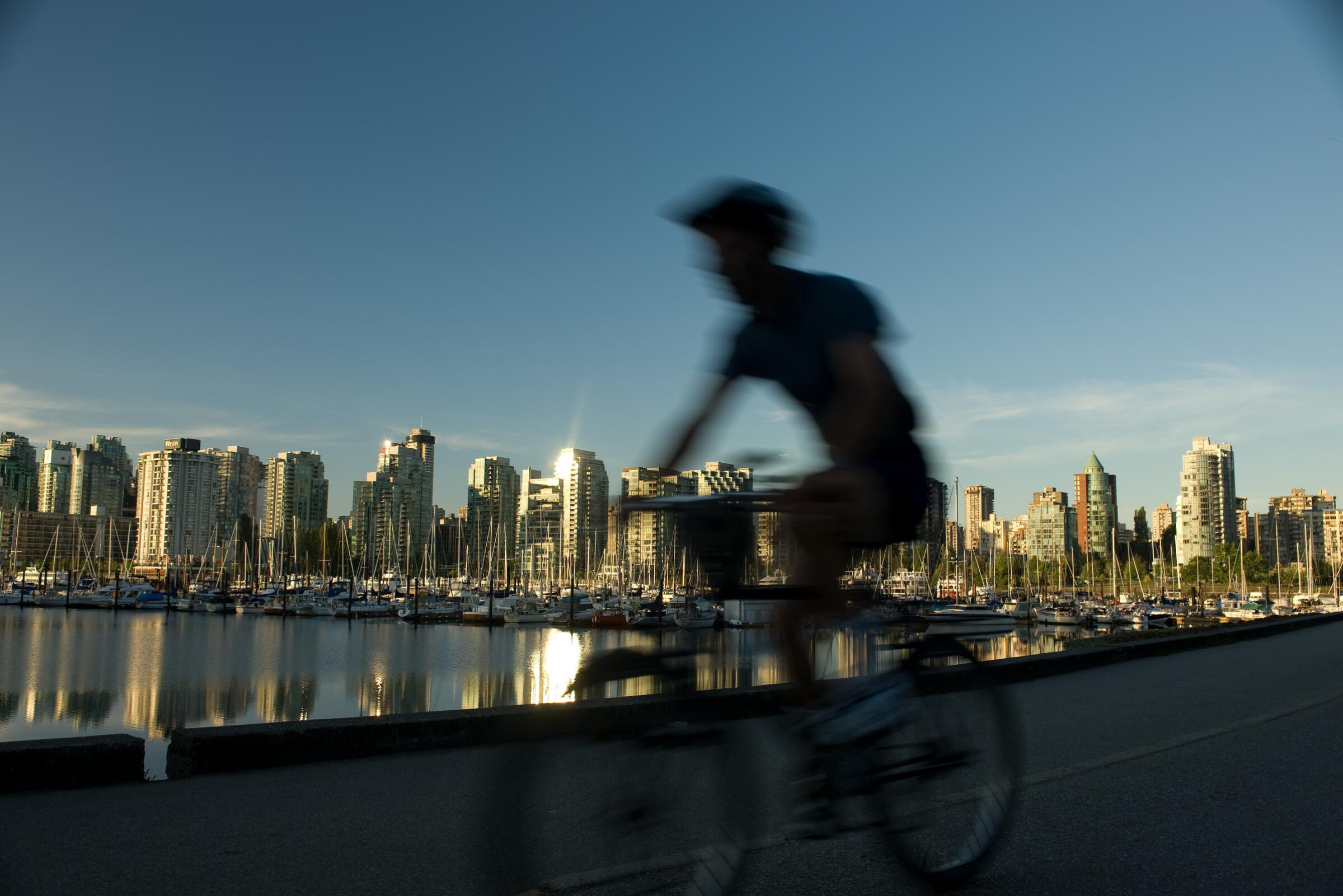
The good news? Vancouver is already one of the easiest cities in North America to get around without a car. With a bit of planning, getting from place to place can actually be part of the experience.
If you’re still in the early stages of planning your trip, it’s worth starting with our complete guide: Everything You Need to Know When Visiting Vancouver for the World Cup. It covers everything from entry requirements to what to expect on game day.
Are the Football Matches different from the Fan Festival?
If you’re planning your World Cup experience, this is something many visitors don’t realize at first: watching a match at the stadium and experiencing the Fan Festival are two completely different things, at two completely different locations.
Understanding the difference can help you decide where to go and how to get there most efficiently.
©Destination BC / Albert Normandin, ©PNE
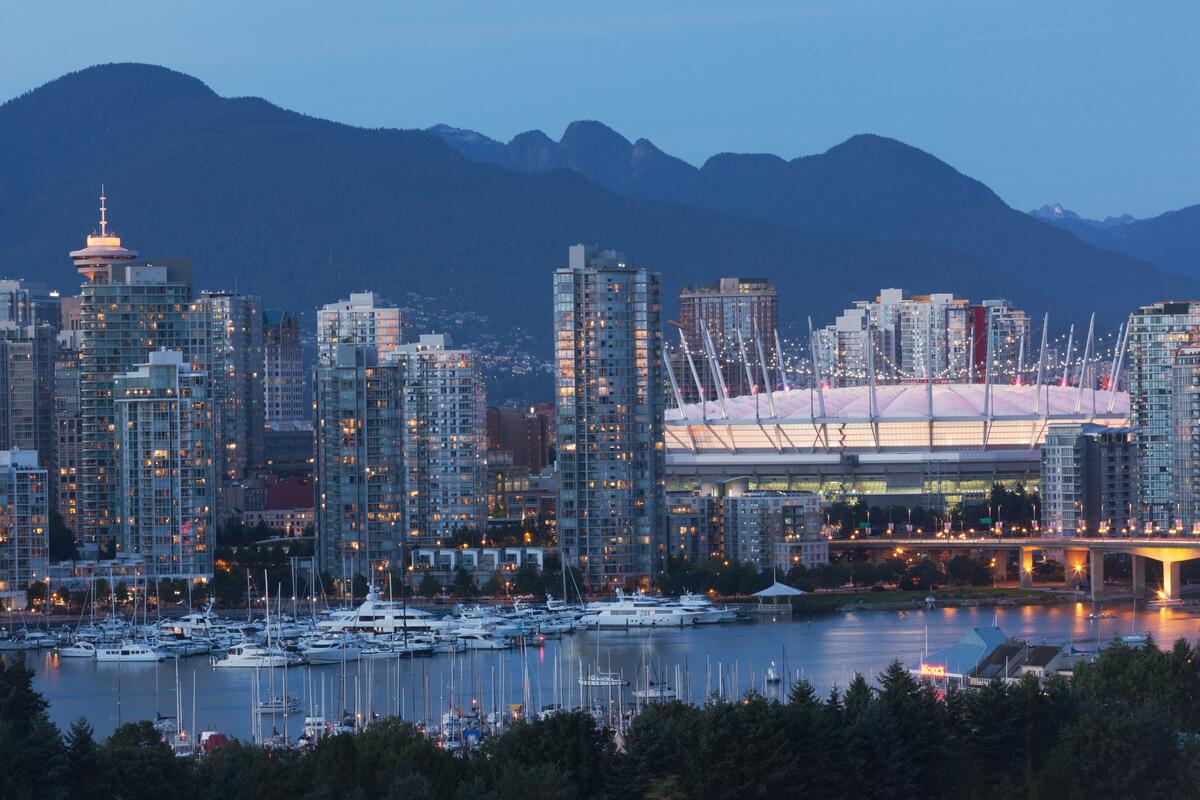
Watching a match at BC Place
If you have a match ticket, you’ll be heading to BC Place in downtown Vancouver.
This is the full stadium experience:
- Live match atmosphere with tens of thousands of fans
- Security screening and timed entry
- Large crowds moving in and out before and after the game
Because of this, the surrounding area will be heavily managed, with road closures and pedestrian-only zones.
👉Best way to get there:
Public transit and walking. Driving will be difficult, and nearby streets will be restricted, so it’s best to plan your route ahead of time.
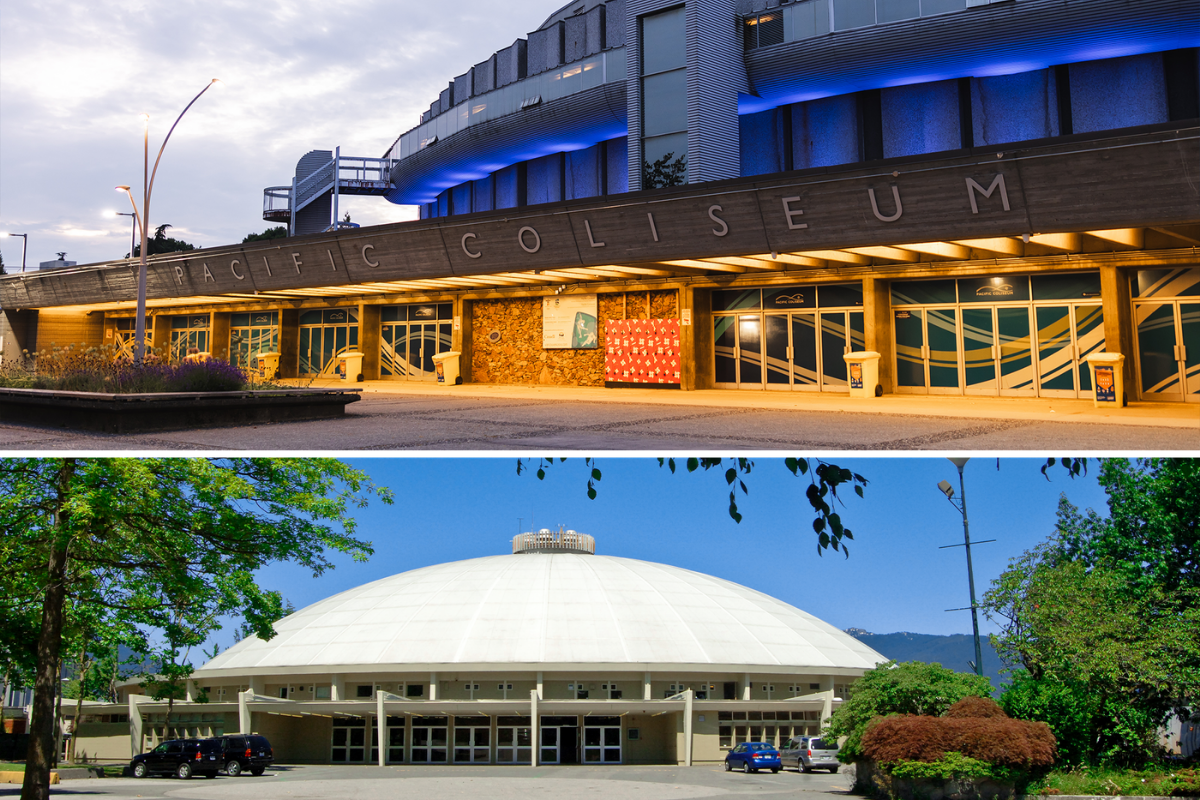
Experiencing the FIFA Fan Festival
If you don’t have match tickets but still want to watch the tournament, you can head to PNE at Hastings Park for the FIFA Fan Festival. While free and accessible for all, you may purchase a premium experience to secure a reserved seat for main stage viewing.
In this fan zone, you will enjoy a festival environment, and it is expected to be one of the main gathering spots during the tournament:
- Live match screenings on big screens
- Food trucks and entertainment
- Open, come-and-go atmosphere
👉Best way to get there:
Public transit (bus or SkyTrain + shuttle), since parking will be limited.
Road Closures & Traffic Changes (What to Expect)
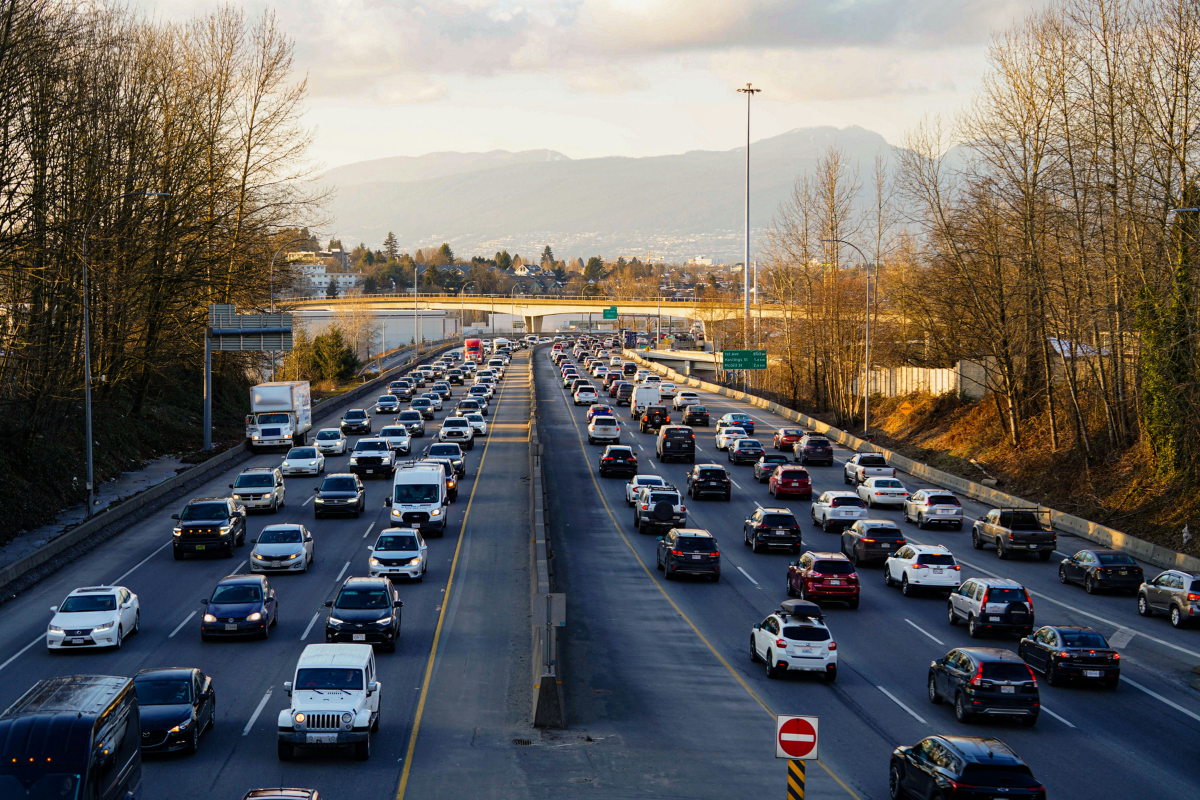
It’s worth knowing how to get around upfront, because the city centre will look a little different than usual. There will be road closures in the city, which includes long term closures as well as match-day closures around BC Place to be aware of.
Long-term closures
In the weeks leading up to and during the tournament period, several key areas will be restricted:
- Pacific Blvd (from the Cambie Bridge off-ramp to Carrall St) will be closed from mid-May through the end of July
- Granville Street (In between Georgia street and Davie street) will be transformed into a pedestrian-only zone from June 11 to July 20
These changes are designed to create safer, more walkable fan spaces, but they do mean less room for cars.
Match-day closures
On game days, expect additional closures near the BC Place stadium:
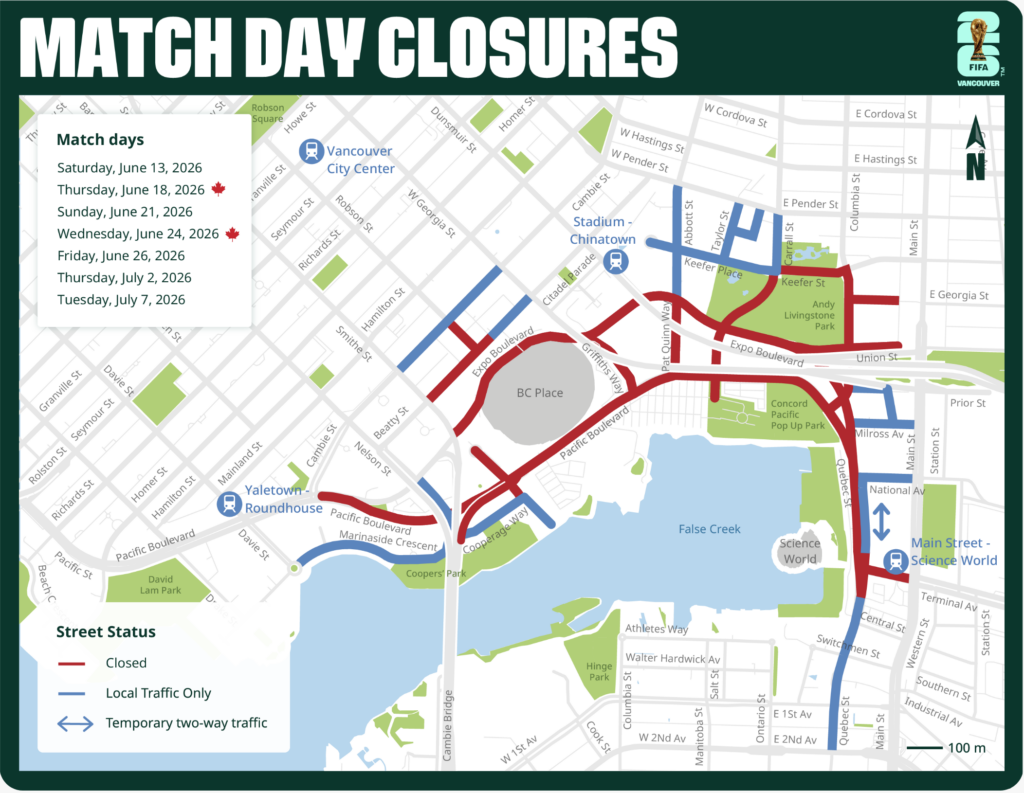
©Image courtesy of FIFA World Cup 2026™ Vancouver
Fully closed streets:
- Beatty St
- Expo Blvd
- Carrall St
- Mainland St
Partial closures:
- Robson St
- Cambie St
- Davie St
- Keefer St
- Parts of Chinatown and False Creek
For the full map of road closures, please visit the official FIFA World Cup 2026™ Vancouver website.
What this means for visitors
In short: downtown Vancouver (especially around BC Place) will become largely pedestrian-focused, so keep the below tips in mind when travelling:
👉Driving is not recommended
👉Expect detours and delays
👉Give yourself extra travel time, especially on match days
For the latest updates, it’s always a good idea to check the official road closures page before heading out.
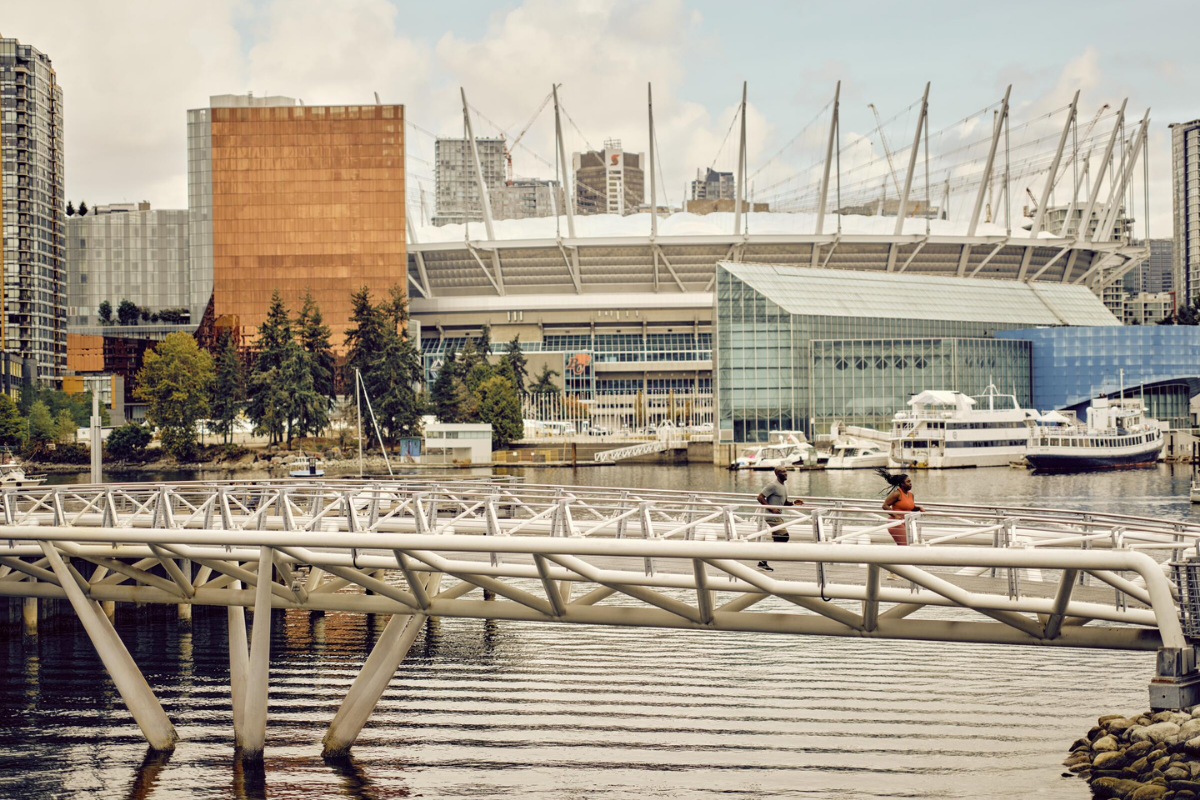
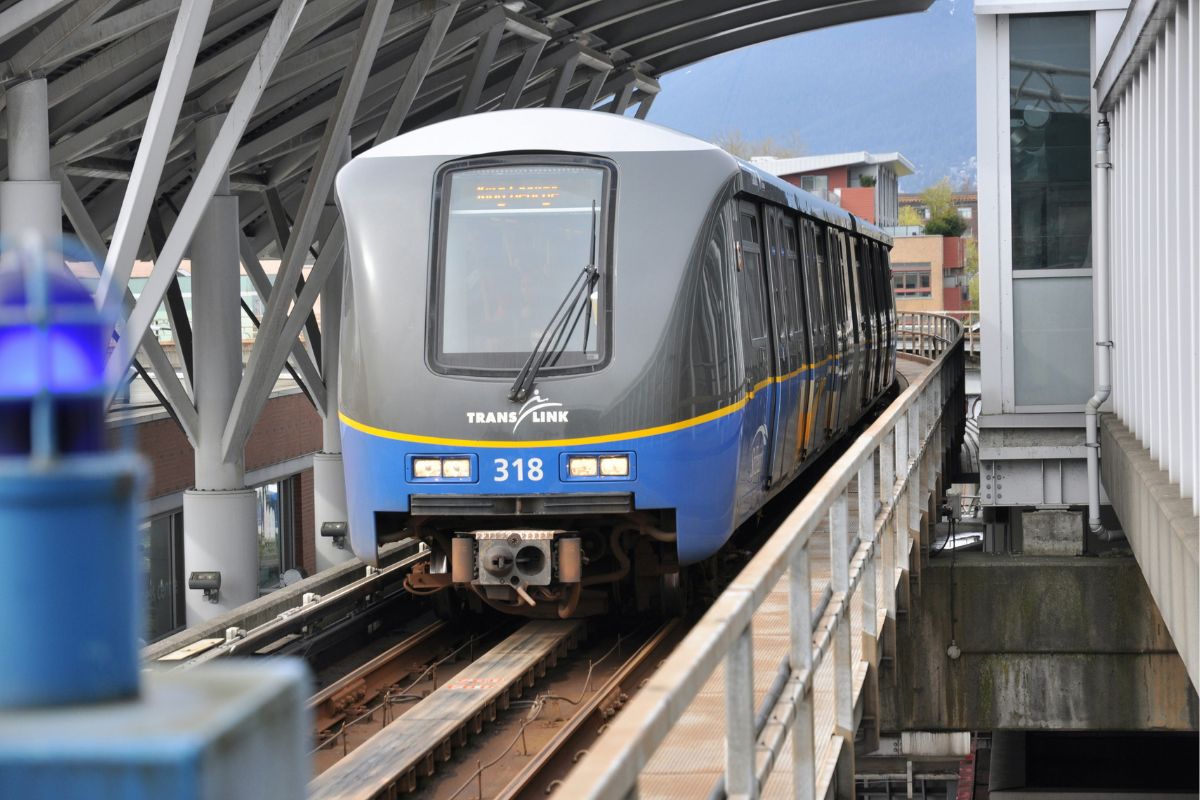
©Destination Vancouver / Kindred & Scout, ©Unsplash / DiegoMazz
Best Ways to Get Around Vancouver During the World Cup
1. Public Transit (Recommended Option)
If there’s one takeaway from this guide, it’s this: use public transit whenever you can.
Vancouver’s transit system, including SkyTrain, buses and SeaBus, will be running at increased capacity throughout the tournament, with hundreds of extra bus trips added daily.
💡A helpful tip for match days:
Use Main Street–Science World Station instead of Stadium–Chinatown Station to access BC Place. It’s often less congested and offers a smoother walk in.
Why transit works so well:
- It avoids road closures
- It’s more frequent and reliable
- It connects directly to major event areas
2. Walking (Highly Recommended in Downtown)
If you’re staying anywhere in or near downtown, walking will likely become your go-to.
The stadium district will feel more like a large pedestrian zone, with fans, pop-ups, and activities throughout the area. Vancouver’s Seawall and surrounding walking routes will remain open, making it easy (and scenic too!) to get around on foot.
💡Neighbourhoods like Yaletown, Gastown, and the West End are all within walking distance of BC Place.
3. Biking & Scooters
Vancouver is one of the most bike-friendly cities in Canada, and during the World Cup, cycling can be a surprisingly efficient way to move around.
Benefits of using this option:
- Dedicated bike lanes across downtown
- Bike parking and valet options near major venues
- Easy to avoid crowded transit routes
If you’re comfortable on a bike, it’s a great option for shorter trips.
4. Rideshare & Taxis
Rideshare services and taxis will still be available, but they won’t always be the fastest choice.
- Expect delays, especially before and after matches
- Pickup and drop-off zones may be restricted, so you may still need to walk
- Prices may fluctuate during peak times
They’re best used later in the evening or outside major match windows.
5. Private Transfers & Charters
While rideshare services and taxis will still be available during the tournament, visitors should expect higher demand, surge pricing, and delays around major event areas before and after matches.
If you’re travelling with family, friends, or a larger group, private transfers and charter services would be a more comfortable and hassle-free alternative. With a dedicated vehicle and driver, you won’t have to worry about transit connections, parking, or waiting for a ride during peak periods.
Private transfers can be especially useful for:
- Airport transfers to and from your hotel
- Transportation to BC Place on match days
- Travel to the Fan Festival at the PNE
- Group transportation for families, friends, or corporate groups
- Exploring Vancouver on your own schedule
💡 Tip: Planning to explore beyond Vancouver? Private charters can also be a convenient option for day trips to destinations like Whistler or Victoria.
Learn more about our Vancouver private transfers and charter services.
6. Driving (Least Recommended)
While it’s still possible to drive in Vancouver, it’s not the easiest way to get around during the tournament.
- Many downtown streets will be closed or restricted
- Parking will be extremely limited
- Traffic congestion will be high
💡If you do have a car, a better approach is to park at a SkyTrain station outside the city centre and take transit into downtown.
Where You Stay Matters
Where you stay can make a big difference in how easy your trip feels.
👉Staying in downtown Vancouver? You’ll likely be able to walk to most places.
👉Staying outside downtown Vancouver? Transit connections are still simple and efficient, provided you plan your route early.
If you haven’t booked an accommodation yet, check out our guide: Where to Stay in Vancouver During the World Cup.
Pro Tips for Getting Around Smoothly
Vancouver is expected to welcome thousands of visitors during the football games, so busy crowds across the city are to be expected.
A few simple navigation tips can make a big difference:
- Plan your route ahead of time (especially on match days)
- Arrive early to avoid peak crowds
- Try to avoid traveling 2 to 3 hours right before kickoff
- Check for real-time updates on transit and road conditions
- Wear comfortable shoes. You’ll likely be walking more than expected
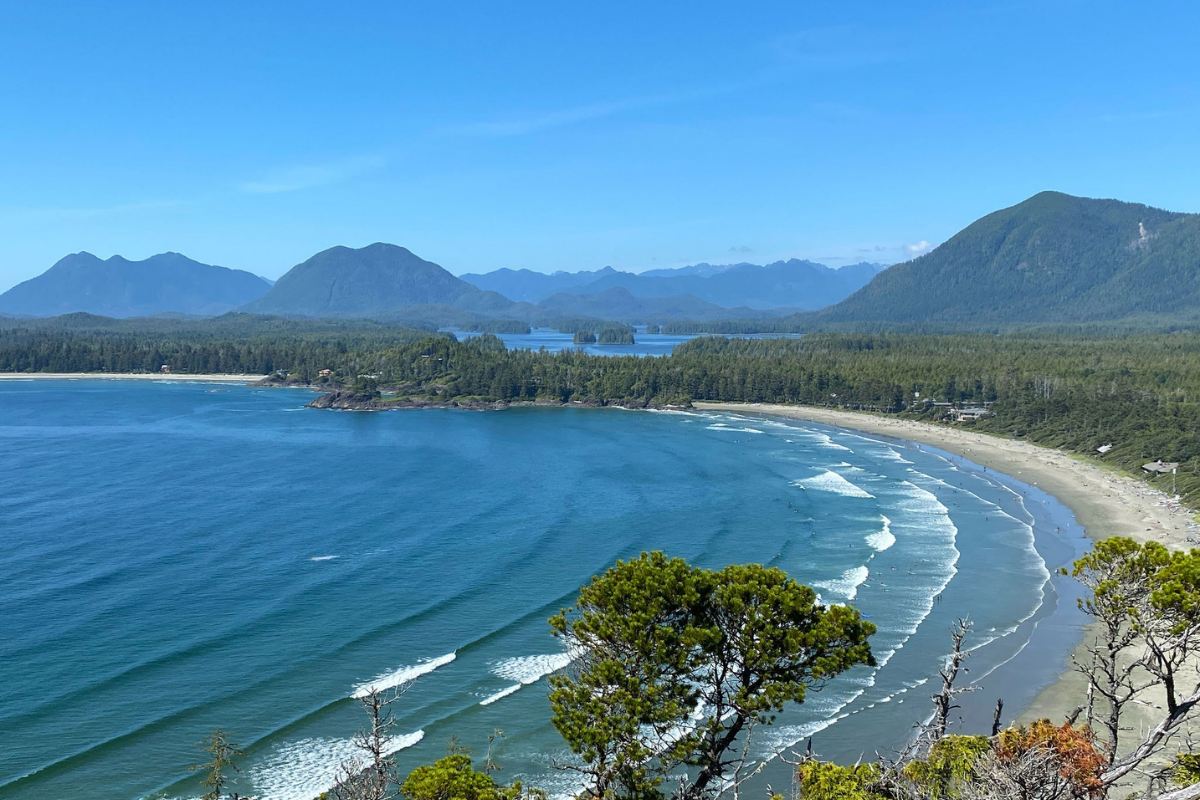
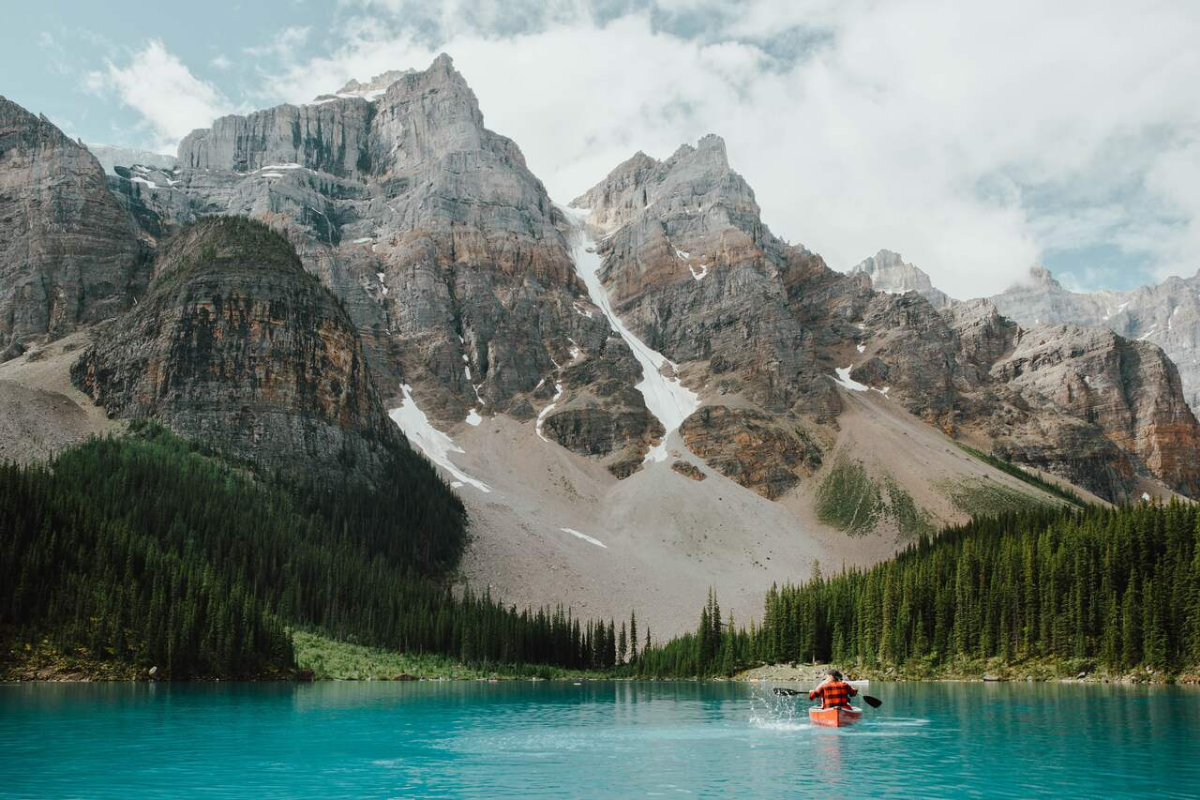
©DCT / Benjamin Egger, ©Travel Alberta / Mike Seehagel
Turn Your Trip Into a Western Canada Adventure
If you’re already making the trip to Vancouver, it’s worth visiting beyond the city!
Summer is one of the best times to explore Western Canada, and some of the country’s most iconic destinations are just a short journey away. This is one of the best chances to visit the Canadian Rockies (including Banff, Lake Louise, Jasper), Vancouver Island, Whistler and the Okanagan Valley, so adding a few extra days before or after your matches is a great way to explore beyond the stadium and make the most of your time here!
Looking for one-day or multi-day tours? Check out our guide to travelling before or after the games for inspiration.
Conclusion
Getting around Vancouver during the FIFA World Cup 2026™ might look a little different than usual, but with the right approach, it will be manageable.
Stick to transit, walk when you can, and plan ahead. Do that, and you’ll spend less time worrying about logistics and more time enjoying the energy of the city.
And if you’re already here? You might as well make the most of it.